
When to Aerate Your Lawn: Timing, Tools and Steps
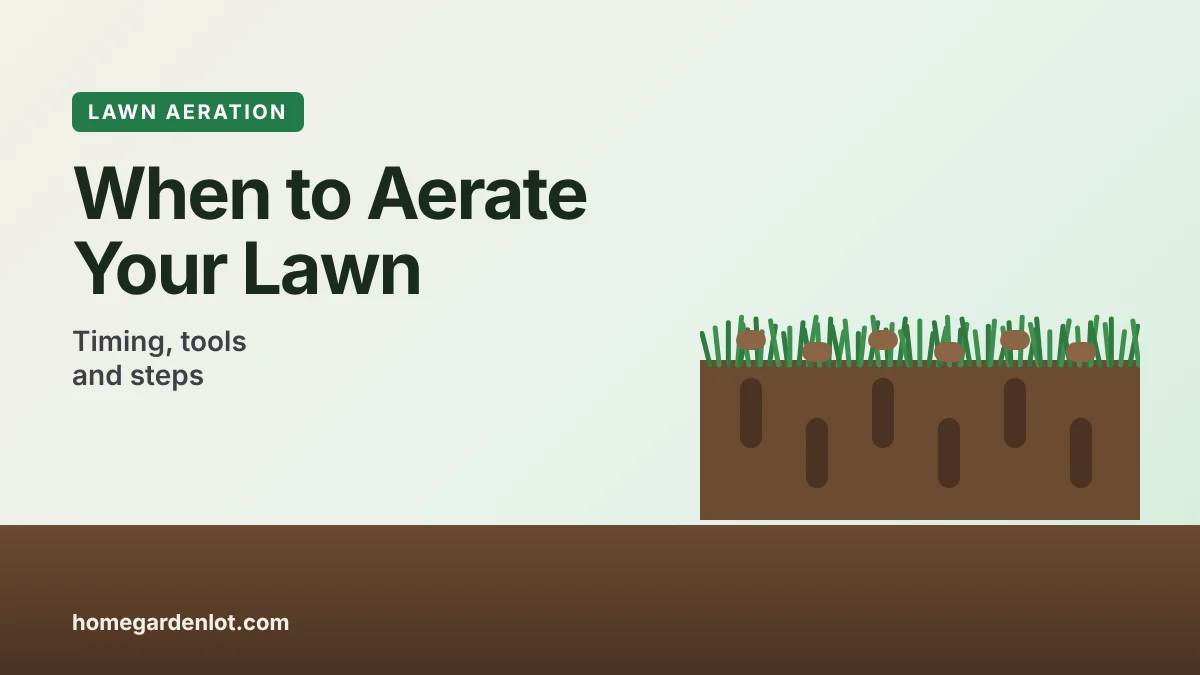
Aerate cool-season lawns in early fall (or spring), and warm-season lawns in late spring to early summer, when the grass is growing fast. Core aeration pulls plugs about 2–3 inches deep to relieve compacted soil. Most lawns need it once a year or every other year; clay soils and heavy-traffic lawns benefit most.
Lawn aeration punches holes in the soil so air, water and nutrients can get down to the roots. If your lawn is thin, puddles after rain or feels hard when you push a screwdriver into it, compaction is a likely cause, and aerating is often the single most effective fix.
This guide explains when to aerate by grass type, how to tell whether you need to, how to do it, and what to do right after. Plan the follow-up feeding with the lawn fertilizer calculator.
- Cool-season grass: aerate in early fall (best) or early spring.
- Warm-season grass: aerate in late spring to early summer, when actively growing.
- Plug size: core tines pull plugs about 1/2–3/4 inch wide and 2–3 inches deep, spaced about 2–4 inches apart.
- Frequency: once a year for compacted or clay soil; every 1–3 years for healthy lawns.
- Best combo: aerate, then overseed and fertilize the same day.
In this guide
- What does lawn aeration do?
- When is the best time to aerate your lawn?
- How do you know if your lawn needs aerating?
- What is the difference between core and spike aeration?
- How do you aerate a lawn step by step?
- How often should you aerate?
- What aeration mistakes should you avoid?
- What is the difference between aerating, dethatching and topdressing?
- Should you rent a core aerator or hire a pro?
- What should you do in the weeks after aerating?
- Does aeration help with thatch and clay soil?
- Is aeration worth it for a healthy lawn?
- Frequently asked questions
- The bottom line
What does lawn aeration do?
Foot traffic, mowing and rain compress soil over time. Compacted soil has fewer air pockets, so water runs off, roots stay shallow and fertilizer sits on the surface. Core aeration removes small plugs of soil, creating channels that let air and water reach the root zone and giving roots room to grow. It also helps break down thatch, as microbes in the soil plugs mix back into the lawn surface.
When is the best time to aerate your lawn?
The rule: aerate when the grass is actively growing, so it can recover and fill holes quickly. This also lines up with the best time to overseed.
| Grass type | Best time | Second choice | Avoid |
|---|---|---|---|
| Kentucky bluegrass, ryegrass, fescue (cool-season) | Late August – October | Early spring (March–May) | Midsummer heat, drought, dormancy |
| Bermudagrass, zoysiagrass (warm-season) | Late spring – early summer (May–June) | Midsummer if watered | Fall and winter dormancy |
| St. Augustinegrass, centipedegrass | Late spring – early summer, if needed | — | Dormancy; usually needs less often |
Aerate when the soil is moist but not soggy, ideally a day or two after rain or watering. Dry soil resists the tines; saturated soil clumps and clogs the machine.
How do you know if your lawn needs aerating?
- Water puddles or runs off instead of soaking in.
- The screwdriver test: if a screwdriver won't push 4–6 inches into moist soil, it's compacted.
- The lawn is thin in high-traffic paths, near the driveway or where kids play.
- Thatch is over 1/2 inch. Cut a wedge of turf and measure the brown spongy layer between green grass and soil.
- The soil is heavy clay, or the lawn was built on subsoil after construction.
- Grass struggles even with correct water and fertilizer.
Planning to feed right after aerating? Use the lawn fertilizer calculator to work out pounds of product for your lawn size.
What is the difference between core and spike aeration?
| Type | How it works | Effectiveness |
|---|---|---|
| Core (plug) aeration | Hollow tines remove plugs of soil | Best: relieves compaction |
| Spike aeration | Solid tines poke holes | Limited: can increase compaction around holes |
| Liquid aeration | Soil-loosening products sprayed on | Little independent evidence; not a replacement for cores |
| Slit seeder | Cuts grooves and drops seed | Good for overseeding; not a full aerator |
University extension services recommend core aeration over spikes. Rent a gas-powered core aerator for a medium or large lawn; hand tools suit small spots.
How do you aerate a lawn step by step?
- Mark hidden hazards. Flag sprinkler heads, shallow lines and invisible dog fence wires.
- Water the day before if the soil is dry, so tines penetrate 2–3 inches.
- Make two passes in different directions. For compacted areas, a second pass at right angles gives better coverage (holes about 2–3 inches apart).
- Leave the plugs. They break down within 1–2 weeks and return nutrients and microbes to the lawn.
- Overseed and fertilize immediately. Seed falls into the holes and has excellent soil contact.
- Water lightly and often for new seed; otherwise resume normal deep watering.
How often should you aerate?
For most home lawns, once every 1–3 years is enough. Aerate every year if you have clay soil, a lot of traffic, or thatch above 1/2 inch. Sandy soil that drains well may only need it every few years. Lawns that were built on fill soil after construction often benefit most from the first treatment.
What aeration mistakes should you avoid?
- Aerating a drought-stressed or dormant lawn, which can't recover quickly.
- Aerating wet clay, which smears and seals the holes instead of opening them.
- Raking up the plugs. They are free topdressing.
- Using spikes and expecting results on hard-packed soil.
- Skipping the overseed/fertilize step, when holes are the best opportunity of the year.
What is the difference between aerating, dethatching and topdressing?
| Job | What it does | When you need it |
|---|---|---|
| Core aeration | Removes plugs to relieve compaction and improve water and air flow | Hard soil, clay, heavy traffic, thin turf |
| Dethatching | Removes the layer of dead stems and roots above the soil | Thatch deeper than about 1/2 inch |
| Topdressing | Spreads a thin layer (about 1/4 inch) of compost or soil | Improving soil, leveling small dips; often after aeration |
| Overseeding | Adds seed to thicken turf | Thin lawn; combines well with aeration |
These jobs work well together in early fall for a cool-season lawn: aerate, overseed, spread a thin layer of compost, and feed. Dethatching, if needed, goes first. Most healthy lawns do not need all four every year.
Should you rent a core aerator or hire a pro?
Renting a gas-powered core aerator is worthwhile for lawns over about 2,000–3,000 sq ft. The machines are heavy (often over 200 lb) and are usually easier with a trailer or a friend to help load. Hiring a lawn service is simpler for large or sloped lawns. For small yards and spot repairs, a manual step-on core aerator is enough, but it is slow work. Whichever route you pick, price it as an example: ask for a quote based on lot size and check what the price includes.
What should you do in the weeks after aerating?
- Days 1–7: water normally; if you overseeded, keep the top inch moist with short, frequent sessions.
- Weeks 2–3: soil plugs break down; run the mower over any stubborn ones.
- Weeks 3–6: new grass fills the holes. Keep traffic light.
- Following spring or fall: repeat only if the lawn is still compacted; check with the screwdriver test.
Does aeration help with thatch and clay soil?
Yes, in both cases, though the effect builds over time. In clay, repeated yearly core aeration slowly opens the top few inches and improves drainage. For thatch, aeration brings soil microbes to the surface, which speeds decomposition, but thatch deeper than an inch usually needs a power rake or dethatcher first. Healthy lawns that are mowed at the right height and not overfertilized build thatch more slowly, so correcting those habits matters too.
Is aeration worth it for a healthy lawn?
If the lawn is thick, drains well and passes the screwdriver test, you can skip a year with no harm. Aeration pays off most on new-construction lawns, clay soil, heavily used lawns and any lawn that you plan to overseed. When in doubt, test a small patch first: aerate one corner, and compare how that area looks and drains over the next month.
Frequently asked questions
Is it better to aerate in spring or fall?
For cool-season grass, fall is better because it also lets you overseed and avoids spring crabgrass. For warm-season grass, late spring to early summer is better because that is when it grows.
Should I aerate before or after mowing?
Mow before you aerate so tines work cleanly and you can see sprinkler heads. Wait a few days after aerating before mowing again.
Do you need to water after aerating?
If you overseeded, keep the surface moist until seedlings emerge. If not, normal deep watering is enough, since the holes help water soak in.
Can you aerate a lawn too much?
Yes. Doing it too often or when the lawn is stressed can damage turf. Once a year in the right season is the most that most lawns need.
What should I do with the soil plugs?
Leave them on the lawn. They break down in a couple of weeks. You can break them up by running a mower over them or raking lightly.
The bottom line
Aerate when your grass is growing: early fall for cool-season lawns, late spring for warm-season lawns. Use a core aerator on moist soil, leave the plugs, then overseed and feed the same day. Use the lawn fertilizer calculator to plan the follow-up feeding.
Related tools: Garden Calculator · Irrigation Runtime Calculator · Soil Calculator
Sources: Core aeration guidance from US university extension services, including Penn State Extension, Michigan State University Extension, the University of Minnesota Extension and Clemson Cooperative Extension. Timing varies by region; check with your local office. Last reviewed: October 2026.
More Lawn Care guides
 Cool-Season vs Warm-Season Grass: What Grows Where
 What Do Fertilizer Numbers Mean? NPK Explained Simply
 How Long to Water Your Lawn: Sprinkler Run Times
 How Much Fertilizer per 1,000 Sq Ft? Pounds of Nitrogen
 How Much Grass Seed Do I Need? Rates by Grass Type
 How to Measure Your Lawn's Square Footage (Any Shape)